






Credit: Louis Sanchez, @RenegadeIndiefilmmakers
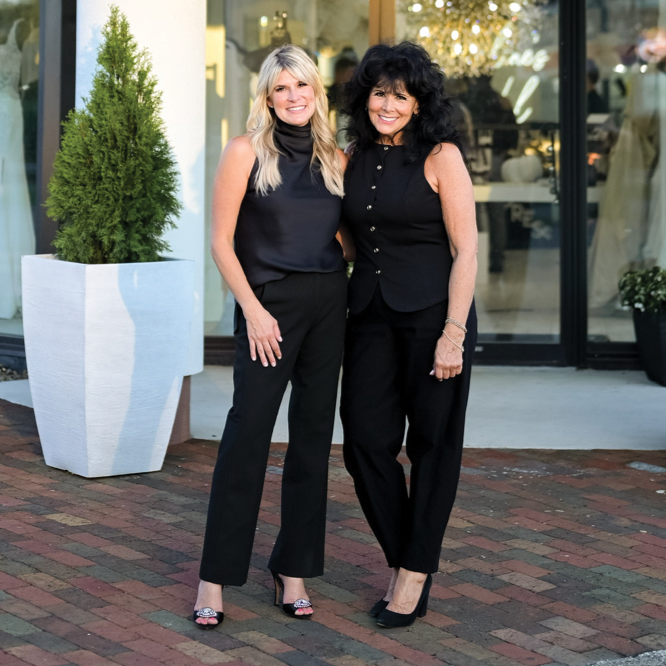
Fifty years after Mon Amie first opened its doors, Laurel Mungo still reacts to a newly arrived wedding gown the same way she did as a young bridal stylist in the late 1970s: with pure excitement.
That’s remarkable not simply because Mon Amie has survived five decades in an industry transformed by changing brides, advancing technology and shifting shopping habits. It’s remarkable because Laurel’s story illustrates something increasingly rare in retail: what happens when a store is built not just on inventory or marketing, but on genuine love for the business.
Originally a college student who wanted a part-time job, Laurel discovered a career, a mentor and eventually a calling. Today, as CEO of one of the country’s most enduring bridal boutiques, she continues to prove that while fashions, sales techniques and consumer expectations evolve, passion, culture and exceptional experiences never go out of style.
“I feel truly blessed,” she says. “I just can’t stress enough how much I love (this industry).”
As Mon Amie celebrates its 50th anniversary, Laurel’s journey offers a master class in succession, staff development, customer experience and the power of building a culture that outlasts changing trends. From finding and training top talent to creating memorable appointments and preserving the founder’s vision, Laurel’s story demonstrates how passion and purpose can become a competitive advantage.
A Calling Discovered
In 1978, Laurel was a 19-year-old college student studying history and journalism at Long Beach State. She wanted to earn some extra spending money while in school and had always loved retail, so she answered a tiny newspaper ad for a bridal stylist at Mon Amie in Costa Mesa, Calif. The boutique’s founder, Verna Huson, gave her the job immediately.
“I started working and then, unbenounced to me, fell in love with it,” Laurel says. “I didn’t realize what effect (bridal) would have on me at the very beginning, but it just got in my blood and it’s still there.”
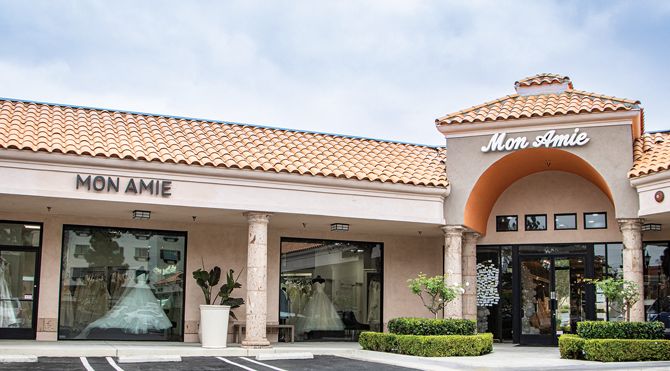
Originally, Mon Amie – which opened on April 15, 1976 – was 800 square feet and had one dressing room, a tiny backroom and a bridesmaids’ dressing room. In addition to bridal, the boutique also sold mothers, flower girls and bridesmaids. Slowly, as Laurel gained competence as a salesperson and stylist, she learned other aspects of running a small business too. Due to the store’s tiny size, employees did everything: cleaning toilets, sales and quarterly taxes, purchase orders, etc.
“It was complete immersion into a small business and I loved every roll,” Laurel says. “Well, maybe not the toilets but I loved knowing what happened from start to finish. And I was very lucky to be able to learn that at that level!”
About two years after Laurel started working, Mon Amie tripled in size. The boutique, which originally began because Verna’s daughters were getting married and she didn’t like the experience of shopping in a department store bridal section, was thriving due to being at the right place at the right time and treating brides with respect.
And Laurel had fallen in love with it. She realized this about a year-and-a-half in, the moment she closed the biggest dollar sale the store had ever had: an Eve of Milady gown and matching hat that, combined, sold for $1,100. At the time wedding gowns averaged maybe $500 and high-end bridal was less than $1k.
“And this bride was so excited she goes, ‘This is my wedding gown!’” Laurel says. “At that particular moment it was like the heavens opened up and I’m like, ‘This is what I’m meant to do!’”
After about three years, Laurel was officially named manager. When it became apparent she could make bridal a career, she stopped taking college classes.
“I never graduated unfortunately; that’s probably the biggest regret I have in life,” she says. “And yet I’ve been to the university of reality and hard knocks, so I did have that sort of education under my belt.”
Laurel remained at Mon Amie from 1978-94, during which point her responsibilities steadily expanded. In addition to being sales manager, she helped train new people, attended New York market with Verna and her daughter, and did purchase orders – all via paper and telephone.
In 1988, Mon Amie moved to its current 15,000-square-foot location. This same year, Laurel met her husband, Robert, on a blind date at a Super Bowl party. They married in 1990, and adopted their first of three children, a son, in 1994.
“At this point I made the difficult, heartfelt decision that I wanted to become a stay-at-home mom,” she says. “Verna loved my husband a lot and knew he could provide for us, and she encouraged me to always follow my heart.”
Laurel and Verna stayed in touch, however, talking a minimum of once a month for years. Laurel recalls the Mon Amie founder, who was a polio survivor, to be “one strong cookie, very much a lady and very proud.” Not only would she insist on hiding her cane before entering a market showroom so nobody could see it, but when she grew increasingly sick in 2012, she refused to let Laurel visit her in the hospital because she didn’t want to be seen without lipstick and her hair done.
“That was her thing – she always had to be completely put together,” Laurel recalls.
Ultimately, Verna passed on December 26, 2012, and her celebration of life reception was held at Mon Amie. “I hadn’t been in the store for probably eight years, and when I walked in it was seriously like coming home to a homecooked meal,” Laurel says. “It was comfortable and it just felt right.”
Shortly after, Laurel returned to work at Mon Amie part-time, assisting with marketing and public relations projects. One day while in the back room, she said to Verna’s daughter: you know your mom always wanted Bobby and I to have the store.
“And she looked at me and said, ‘You want it? I’m ready to get out!’” Laurel recalls. “And so we talked about it and Bobby knew my love of Mon Amie and that’s how this story came about.”
Building an Experience Brides Remember
Laurel officially became CEO of Mon Amie in August 2013, a role she has held ever since in an industry she cherishes deeply.
“I love everything about it, really!” she says. “There’s nothing more satisfying than when a bride has decided to purchase a gown and I walk over to her and want to celebrate with her. And we’re celebrating that she is going to stand in this beautiful dress, marry and vow to love a person for the rest of her life!”
Laurel acknowledges that the search for a gown has changed significantly over the years, from a generation focused exclusively on finding a dress at the best possible price to a different goal.
“Brides are looking for an experience that makes them feel seen, beautiful and safe,” she says. “Especially because we’re all pretty much on the same page price wise, that’s not really the goal anymore. The goal is the experience.”
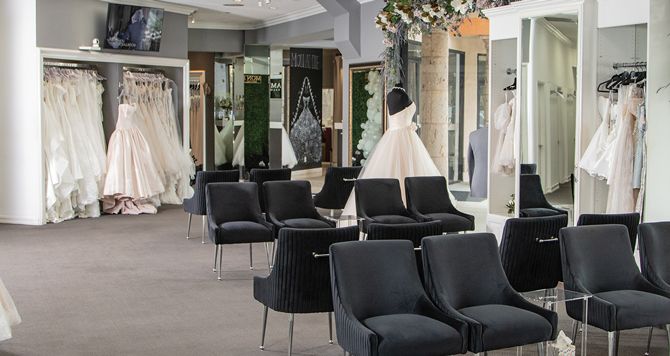
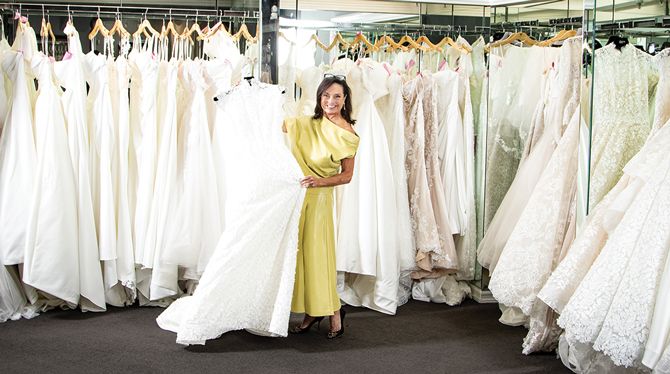
Creating that experience requires a deliberate strategy. First and foremost, Mon Amie has amazing depth of selection. The boutique carries bridal gowns and accessories from a total of 51 designers, which are listed on its website.
“If we don’t have a look that they’re looking for then shame on me,” Laurel says. “Because that’s something I try very hard at – to get at least one or two pieces in every single look. I would say the depth of our selection is very unique in our area.”
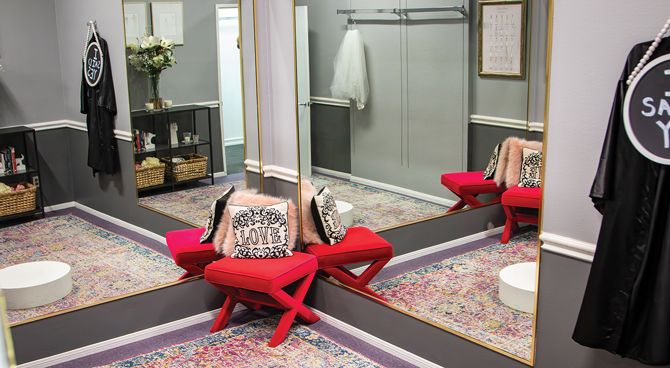
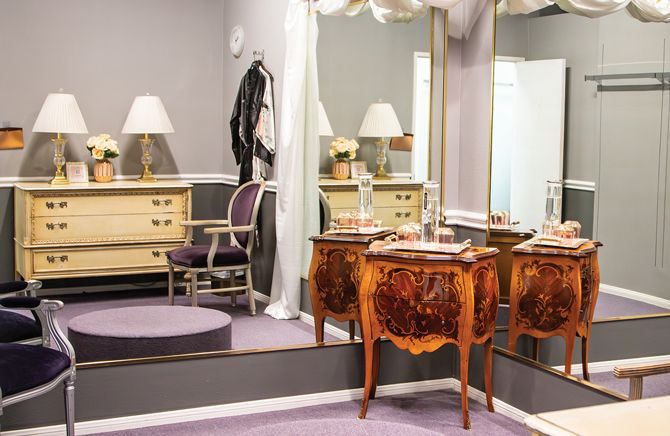
Another unique feature is the boutique’s 16 large dressing rooms, each of which can accommodate the bride on a pedestal plus four other guests and the consultant.
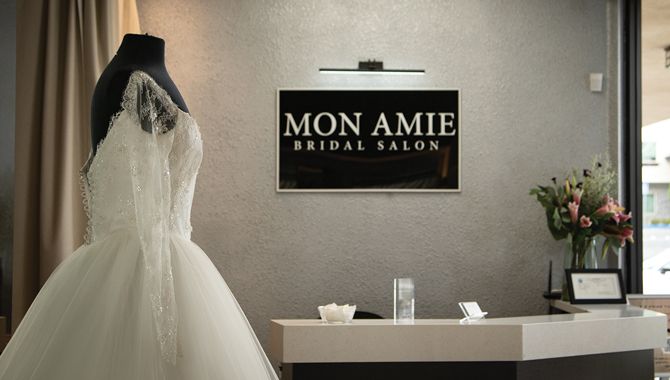
Not only are there real doors in lieu of curtains, but each consultant is assigned her own fitting room, in which she holds all of her appointments and is allowed to decorate to suit her personality. As a result, each fitting room boasts a different aesthetic, ranging from very vintage, complete with a 1920s wedding gown hanging on the wall and bridal books from the 40s-50s; to fun modern with little black furniture and bright pink “Love” things everywhere.
“We feel comfortable letting them do that because it’s where they’re comfortable,” Laurel says. “(The different styles) are a non-issue because their presentation to the brides and knowledge of stock is pretty much the same across the board.”
Of course, creating memorable experiences ultimately comes down to people. To ensure top-notch service, extensive effort goes into finding and training staff. Laurel’s top two salespeople are women she found herself while out shopping “because I’m such a great consumer myself,” she laughs.
The first worked at Saks Fifth Avenue and the second a red light therapy salon. In both cases, Laurel would talk with these women regularly and thought they were quite personable. When they found out what Laurel did and expressed interest in bridal, she hired them. The former is still with Mon Amie after 12 years and the latter, a retired policewoman with amazing listening and body language skills, “has seriously broken every sales record we’ve ever had!”
“Always be looking and go with your gut!” Laurel says. “Be open and take that leap of faith if it’s something you believe in.”
For compensation, stylists have three options: a higher dollar per hour with a lower percentage of commission; medium dollar per hour with medium commission; commission only at a very high percentage (with this option, if someone doesn’t sell they get minimum wage).
Additionally, Laurel will sometimes throw in enticements, like whoever closes the first sale that day gets $100 or whoever sells highest total dollar gets $250. There are also opportunities to make additional compensation from manufacturers or designers during trunk shows.
Currently, two consultants have elected to be commission only and the rest are at the medium level. Consultants are allowed to change their pay range up to three times a year.
“The hardest thing about bridal is the confidence,” Laurel says. “So if they need a couple of months to get their feet wet they go with the more per hour and less on commission. (This system) is more to make them feel comfortable and let them believe in themselves.”
Beyond that, training is extensive. No new consultant can be with a bride by herself for three weeks and must shadow in every department including alterations, shipping and receiving and the phone room. They also do hands-on training with the POS system, as well as about 10 days of shadowing different consultants.
“They’re glued to their side but they don’t talk or offer any opinions,” Laurel says. “They’re there to observe and see how an appointment runs.”
Finally, Mon Amie holds regular sales meetings to address ongoing issues and do continuous product training.
“We don’t want to misinform or guide brides in the wrong direction, so we really train our stylists so they’re comfortable with the depth of our selection,” Laurel says. “That way they won’t show them something they can’t get in time or that’s $1,500 over their price point. We’re very respectful of price points and very respectful of what brides think they want.”
Lessons From Five Decades in Bridal
Many years of experience have given Laurel a front-row seat to changing consumer behaviors, shifting fashion trends and evolving retail challenges. Along the way, she has developed a few hard-earned philosophies that continue to guide her leadership today.
The biggest, which she admits she still isn’t great at, is not to overbuy.
“That’s a tough, tough lesson to learn and the less you can buy the harder it is,” she says. “Because I can walk into any showroom and fall in love with at least six wedding gowns. I mean I just love them! We can’t buy it all, but we want to!”
To avoid oversaturation, Laurel always brings somebody else with her to market “to either take my pen away or kick me under the table. That definitely helps!”
Another lesson is how to successfully navigate the posse brides bring with them to appointments, especially considering how very important those peoples’ opinions are to them.
“You have to respect and acknowledge each and every one of them,” she says. “And once they realize you respect their presence and hear them, then you can say, ‘ok, so as we all know, we’re here for Suzy. And I think that she’s leaning in this direction.’ And then just let the bride take the reins. But you actually have to say those words.”
As owner, Laurel is very involved, working in the store four days a week (Mon Amie is closed Tuesdays and Thursdays and she recently started taking Sundays off). Daily, she spends time going through emails, talking to anyone who needs to and has final say in every major decision. But most of all she enjoys interacting with people, being on the floor and of course those beautiful gowns.
“It’s like Christmastime when the new stock comes in,” she says. “I kind of ask them to open things out of order just so we can see it because I still get excited!”
Additionally – and here is a fun fact – she loves to steam gowns.
“Always have,” she says. “Steaming and ironing are a super fun thing for me.”
As for other core tenets of how she operates the store, Laurel is a big believer in social media (“You have to be present, period – there are no other avenues to grab brides”), including humor in everything you do (“Because you have to be able to laugh with them, never at them, and at yourself!”) and showing respect to every single person who walks through your doors (“Because these brides have a choice as to where they want to go.”)
While these principles definitely help Mon Amie run smoothly, over the years there have been challenges of course.
Throughout everything though, there is one constant that hasn’t waivered a bit:
“It’s love of it; you have to love it and I can’t say that enough,” she says. “Because it’s a lot of work. Yes, there are fun times, but consistently you have to be willing and able to put in the time and effort to have any amount of success in this industry.”
Keeper of a Legacy
On April 15, 2026, Mon Amie officially marked 50 years in business, a monumental achievement for a little boutique that was born to fill a niche.
“It’s kind of like when a person turns 50 – you can’t believe it’s been that long because it seems like the blink of an eye,” she says. “In looking back in what has happened in this country, in this world since 1976, that’s what really amazing. Changes in industry, technology, travel, fashion – things like that boggle my mind!”
For Laurel, the anniversary is about more than celebrating longevity. It’s about honoring the generations of brides, employees and industry relationships that helped make Mon Amie what it is today.
Rather than have a gigantic party, she has opted to incorporate multiple 50th anniversary activities throughout the year “because the success of this store didn’t start when those doors opened,” she says. “Our story began, but the success came slowly and evenly.”
At the beginning of the year, they designed a tree with branches on the front window. Every bride that purchases from Mon Amie is given a small card that says “50th Anniversary” in gold on the outside and asked to write a small note inside – to other brides, to their stylist, to their fiancé. This is then taped to this window.
Any bride who walks through the door is asked to take a selfie with their polaroid camera and tape it to this photo scrapbook, and write a note saying how they enjoyed their time with Mon Amie.
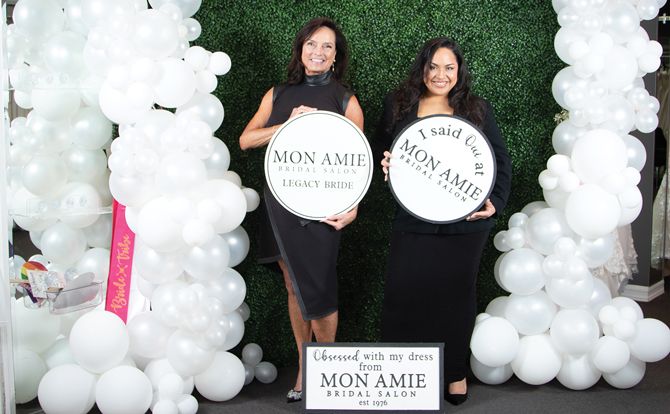
And legacy brides – whose mothers, aunts or grandmothers got their dresses from Mon Amie – receive a handkerchief embroidered with “Mon Amie established 1976” when picking up their gown this year. They also, along with their moms, get a t-shirt that says “Mon Amie legacy bride.”
Finally, Mon Amie is having 50th anniversary wedding gowns designed especially for the store and these styles will be exclusive to the boutique for one year.
“I want everyone to know how much I love what I do and how blessed I feel (to have reached this milestone),” Laurel says. “The many people I have met over the years have made my life richer. Whether it be other storeowners or vendors, I just enjoy everybody that’s in this industry.”
She enjoys it so much, in fact, that there is no plan to exit. The only way Mon Amie would move locations is if Laurel could find a building to buy, something she says is unlikely in Costa Mesa, but even if that happens the store will continue.
“Eventually it will be handed off to somebody that will continue the legacy started by Verna, and that is for sure,” she says.
In the meantime, she is grateful to have a COO and sales manager in place who “are very, very capable and I really trust” so she has been able to enjoy her passion for travel quite a bit in the last couple of years.
“If I have a work-life balance, who knows when I will retire?” she says. “I love it so much that I cannot picture (bridal) not being part of my life.”